
Where will you park and plug in?
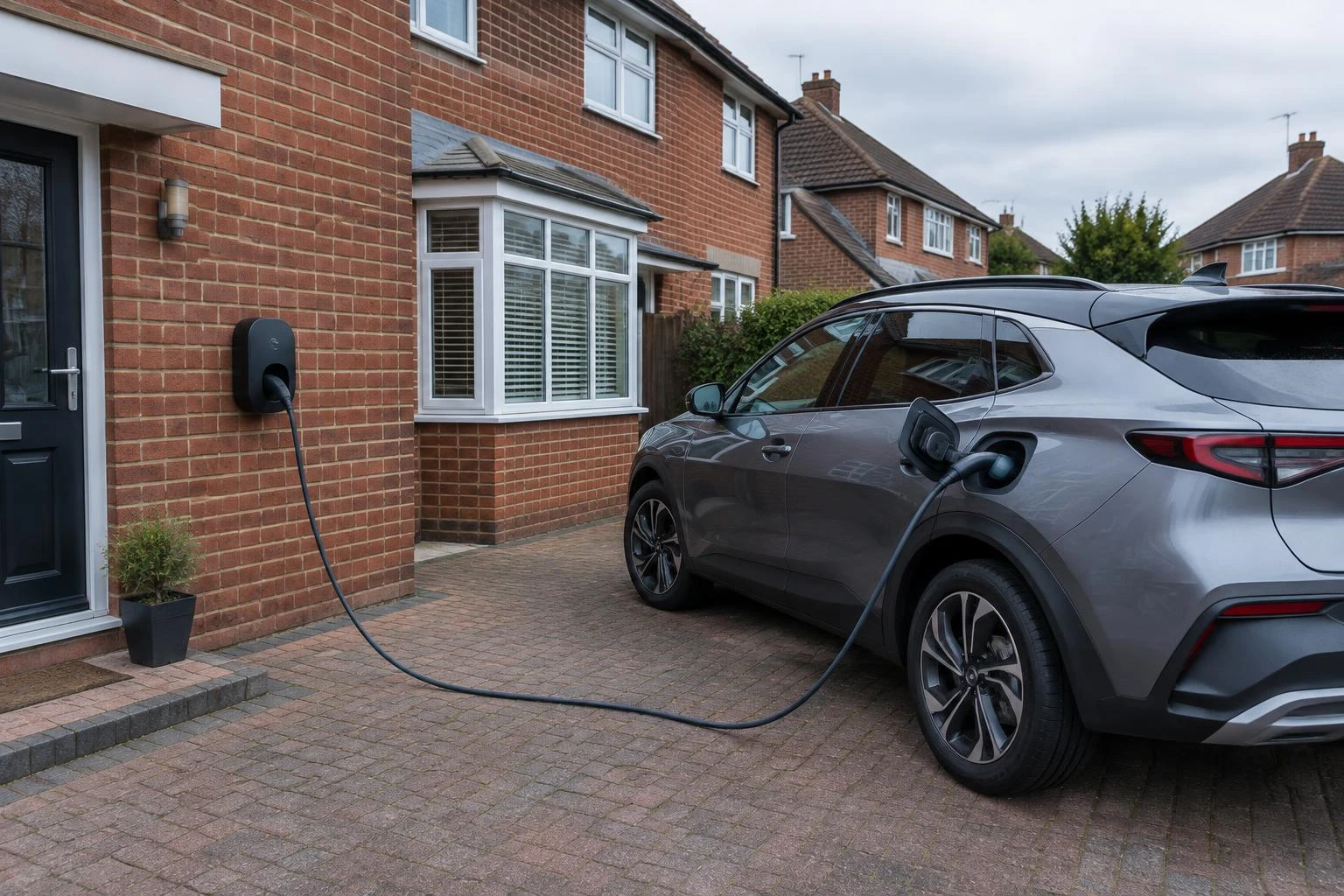
Think about where the vehicle normally stops and which side its charging socket is on. The charger should be reachable without pulling the lead tight, trapping it under a garage door or trailing it beyond your own space. A wall-mounted unit might suit a garage or the side of the house, while other arrangements may call for a different mounting position. The location also affects the cable route back to the supply. If parking is shared, leased or outside your property boundary, permissions and a safe arrangement need attention before an installation can be planned. Let Sean know about these details when you make an enquiry.
Tethered or untethered charging
A tethered charger has a charging lead attached, which can make the daily routine convenient. With an untethered unit, you connect a separate lead when you want to charge. Neither choice is automatically right for every driver. Consider storage, lead length, compatibility, appearance and who else may use the point. Check the connector requirements of your vehicle rather than assuming all equipment is interchangeable. A cable needs somewhere appropriate to rest between sessions so it does not become a trip hazard or suffer damage. If you are changing vehicles, discuss whether the proposed equipment will remain suitable for the next one.
Your fuse box and the new circuit
Adding a charging point usually involves a dedicated circuit and suitable protection. The existing consumer unit (fuse box) needs inspection for capacity, condition and compatibility with the required equipment. Spare spaces alone do not prove that an installation is suitable. The earthing system, incoming supply and other electrical loads also matter. If the home has old rewireable fuses or a board that cannot accommodate the necessary arrangement, replacement may need to be included in the wider work. Testing can reveal issues that need resolving before a new circuit is connected. These considerations should be explained as part of defining the scope.
Overnight charging and everyday routines
Some households prefer to connect the vehicle in the evening and have it ready for the next journey. Smart scheduling can help organise that routine, subject to the features of the charger and vehicle. Any electricity tariff or energy-saving claim should be checked with your supplier; an installer cannot promise that every driver will achieve the same running cost. Connectivity also deserves thought. An app-controlled point may need a reliable connection at the charger rather than just inside the living room. Sean can discuss the electrical arrangement, while the product instructions explain how its scheduling and settings work.
Cable routes, paving and access
The distance between the consumer unit and parking space is only part of the picture. A direct-looking route might pass through a finished room, need containment along an outside wall or cross a hard surface. Groundworks and making good should be discussed explicitly, including who is doing them and how the route will be protected. Access is needed to the supply equipment and relevant parts of the home. Keep the intended parking area clear on the agreed day and mention any access restrictions in advance. A tidy plan avoids finding out late that a cable cannot follow the route originally imagined.
Installation, testing and handover
The agreed work includes the electrical connections, the necessary testing and commissioning of the charging equipment. Power may have to be isolated while connections are made; tell Sean about anything that needs special consideration. At handover, the charger’s basic operation and relevant documentation should be clear. Keep the instructions with your electrical records and do not attempt to modify the circuit yourself. If you later add an electric shower, heating or a second charging point, ask for the overall demand to be reassessed. Your installation should be designed around the home you actually have, with a realistic view of possible changes.
A home charging enquiry checklist
Share whether the vehicle is parked nose-in or reversed, whether the garage is used for parking and whether access crosses any shared land. Explain if the electricity meter or fuse box is in a difficult-to-reach position. Mention known electrical problems and planned additions without assuming they are unrelated to charging. Where the property is rented or leasehold, confirm who can approve the proposed alteration. These are details an equipment brochure cannot answer. Having them ready helps Sean discuss the next assessment steps and prevents an initial quote request from describing only the charger while leaving the installation constraints unexplained.
Before the first charging session
At handover, make sure you understand how to connect and disconnect the vehicle using the chosen equipment. Find out where the normal controls are and keep the product instructions accessible. If smart scheduling is enabled, confirm that the settings reflect the routine you intend rather than a default you have not checked. A charger is not an invitation to modify the wiring or bypass protection. If the lead is damaged or charging behaves unexpectedly, follow suitable product guidance and seek help rather than continuing to use suspect equipment. Changes to a vehicle or an electrical supply may deserve a fresh discussion about compatibility and demand.