
A charging point planned around your property
An electric vehicle changes the way you use your electrical supply. Rather than choosing a charger by its appearance alone, start with where you park, how you drive and what the existing installation can support. A charging point should be convenient to reach without leaving a cable stretched across a footpath or a shared entrance. At SR Installations (Electricals), the conversation starts with the property and the vehicle. You can ask about a single point at home, workplace charging or an installation that may need to accommodate additional vehicles later. Share the postcode and an outline of what you need so Sean can discuss the next steps.
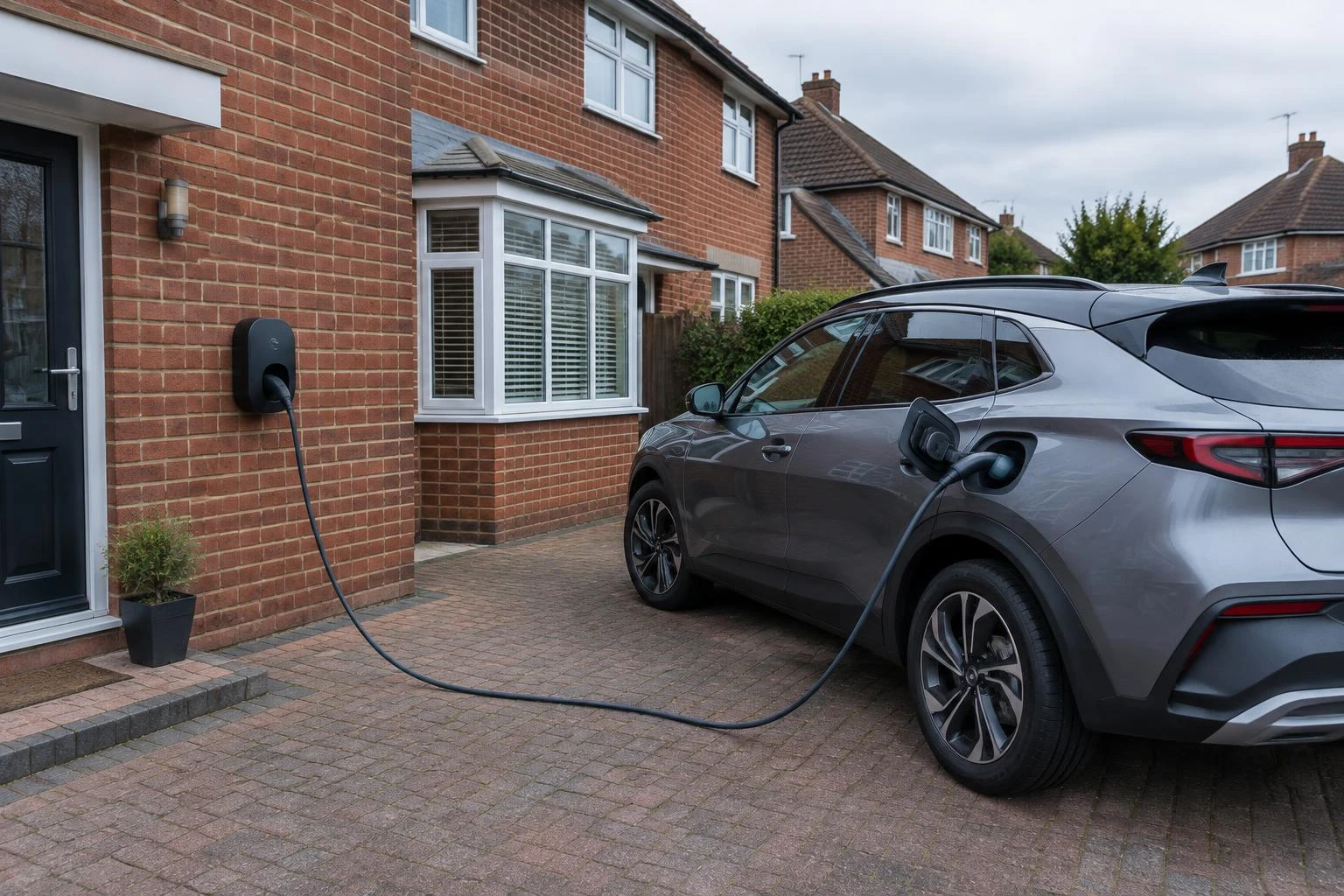
What an EV charging survey checks
The survey considers the incoming electrical supply, the earthing arrangement, the capacity of the consumer unit (fuse box) and the proposed cable route. Protective devices, existing circuits and the position of the electricity meter can all influence the design. A route that looks short on a plan may still involve walls, paving or an awkward access point. Sean will need to understand how the property is supplied before confirming a suitable arrangement. Sometimes another part of the installation needs attention before charging equipment can be fitted. This is why a description or photograph of the fuse box is useful at the enquiry stage, but cannot replace an assessment.
Choosing a smart charger
Smart charging can help you manage when a vehicle charges, rather than starting immediately whenever it is plugged in. Available controls vary between products: scheduling, usage information and ways to adjust a session may depend on an app or a network connection. Compatibility should be checked against the vehicle and the way you want to use the charger. For a household, overnight charging might be the priority. A business may be more interested in managing several vehicles or separating access for different users. Decide what matters before choosing equipment, and check whether a stable connection is available at the proposed mounting point.
Supply capacity and protective equipment
A charging circuit needs to be considered alongside the rest of the building. Electric showers, cooking appliances, heating and other substantial loads may affect the available capacity. The answer is not simply to fit a larger circuit breaker. Cable sizing, fault protection, earthing and the suitability of the distribution equipment are part of the design. Electrical work is planned with reference to BS 7671 and the requirements relevant to the equipment. Where load management is appropriate, it can adjust charging demand according to how the supply is being used. Any supply-network involvement or associated upgrade should be identified before the installation is agreed.
From the survey to installation day
Once the design and scope are clear, the practical details can be discussed: charger position, cable containment, access to the meter and consumer unit, and any work around the driveway or workplace. Electrical isolation may be needed during connections, so it is important to know who will be in the property and which equipment must remain available. Following installation, the circuit and charging equipment need testing and commissioning. The controls should be checked and the relevant electrical documentation provided. There is no one fixed installation time that suits every property; the route, condition of the existing wiring and agreed work all influence the arrangements.
Home and workplace options
A domestic installation may focus on keeping a lead within the driveway and making everyday charging straightforward. Commercial charging has different questions, including employee parking, fleet needs, access control and the effect of simultaneous sessions on the building supply. You will find separate pages for home charging and workplace charging below. If the existing fuse box is a limiting factor, the consumer unit page explains what replacement can involve. The cost guide covers the factors that shape a quote without suggesting a universal price. Send the details of your property rather than relying on an estimate designed for a different installation.
A few decisions to make before the survey
Consider whether the vehicle is kept in the same place every day or whether different drivers use the parking area. Check whether the proposed cable would remain entirely within a space you are entitled to use. If another person owns the wall or ground where equipment might be installed, clarify their permission rather than assuming an electrical assessment grants it. A site plan can be helpful for a business, while a description of the driveway can be enough to start a household enquiry. You do not need to select every device in advance. It is often more useful to decide the intended routine and then consider products that support it. Let Sean know if you already have equipment, as an installation enquiry should establish its specification and suitability rather than assume any charger can be fitted in any location.
Keeping charging equipment in good condition
Once equipment is installed, use it in line with the manufacturer’s instructions and keep the cable stored appropriately. Look out for physical damage, loose fittings or a change in normal operation. Do not continue to rely on a charger showing damage, and do not attempt repairs inside the equipment. Product settings and electrical modifications are different matters: changing a charging schedule in an app is not the same as changing circuit protection or wiring. Keep installation documents somewhere accessible so a later electrician can understand the arrangement. If the parking layout, supply or other significant loads change, ask whether the charging design needs review. A second vehicle or an alteration to the property can introduce questions not covered by the original scope. Manufacturer support may be relevant to software or product issues, while electrical faults require suitable investigation.