
Recognising an older arrangement
Some older fuse boxes use removable carriers with fuse wire rather than modern circuit breakers. Others have breakers but lack the protective arrangement needed for proposed work. Age and appearance are not enough to diagnose a fault, so do not remove covers or handle internal parts to investigate. Take an external photograph if it is safe and accessible, and explain any difficulties you have noticed. Signs such as a damaged enclosure, unexplained heat or a burning smell need professional attention, not a cosmetic upgrade. If there is an immediate danger, stop using the affected equipment and seek help.
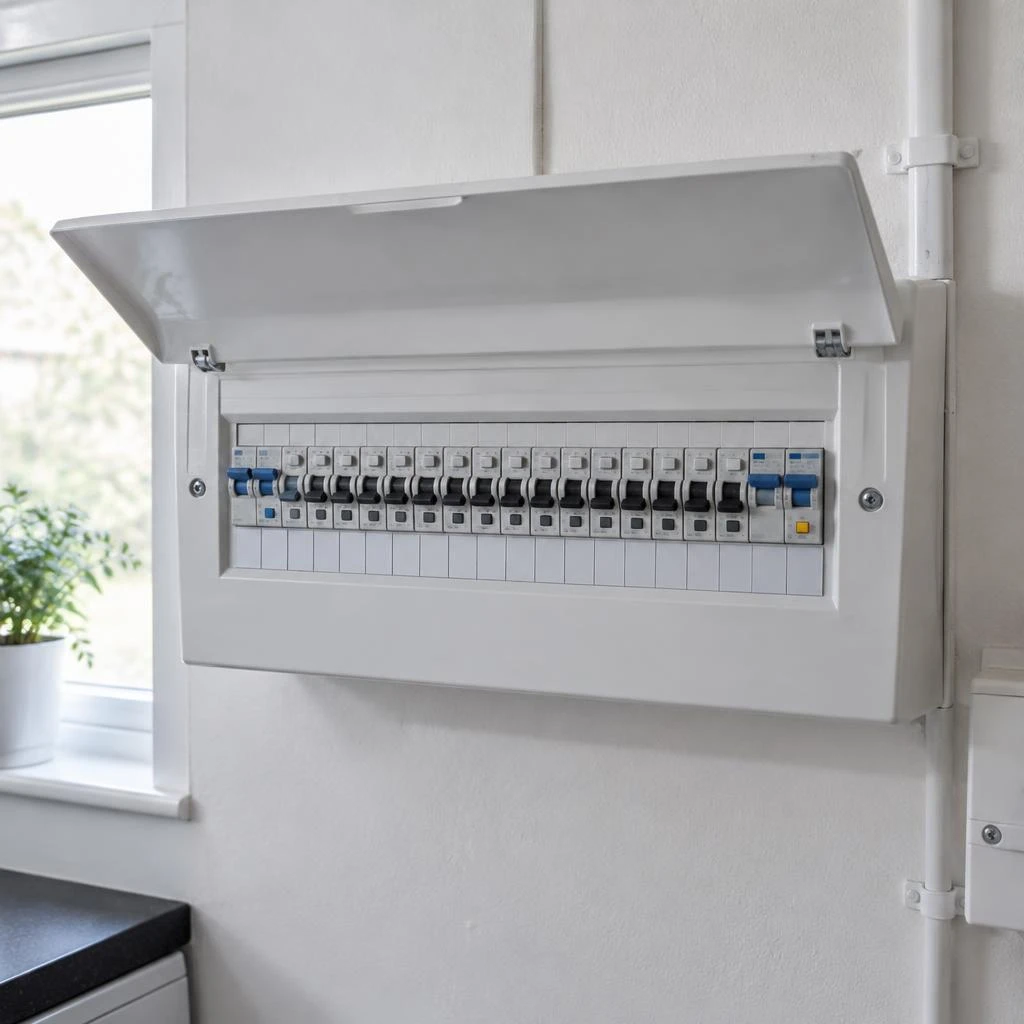
An unsatisfactory EICR and the next steps
A failed electrical inspection can be a reason to look at the fuse box, but the report may contain several separate observations. Read the classifications and recommended action rather than assuming the entire problem is contained in the board. A replacement can address some protection issues while other faults require work to the circuits, earthing or accessories. Sean can discuss the observations and how remedial work should be organised. Send the report with your enquiry if you have it. The EICR page explains the different codes and why an inspection is not the same as issuing a certificate for new work.
What changes with an upgrade
A modern installation may use protective devices with a different response to faults from older fuse arrangements. That can be an important improvement, but it also makes the condition and configuration of existing wiring relevant. Protection must be appropriate to the circuit and the overall design, with reference to BS 7671. The enclosure, connections and circuit schedule need consideration alongside the devices themselves. You should be able to understand what the proposed work covers and what it does not. A shiny new box does not, on its own, establish that hidden wiring or past alterations are satisfactory.
When testing uncovers wider problems
Testing can reveal insulation faults, borrowed neutrals or deficiencies in earthing and bonding. These are examples of issues that need assessment rather than a remote diagnosis. If an existing circuit cannot safely be put into use with the new equipment, it needs attention before it is relied upon. Some repairs may be local; others can point towards a larger wiring project. Access under floors or to particular rooms may be necessary. The purpose of testing is to inform a safe decision, so allow for the possibility that the final scope will differ from a request to change only the visible fuse box.
Getting ready for the work
Before the agreed appointment, clear access to the fuse box and supply equipment. Explain whether the home is occupied, whether any occupants have particular needs and whether you have electrical records from previous work. The change requires isolation and testing. Avoid planning around an assumed fixed power-off period, because the condition of the circuits influences what happens. If your main objective is to add a charging point or another circuit, include that in the initial discussion. A coordinated assessment is more useful than replacing equipment now and only afterwards discovering what the new addition requires.
Keep the outcome clear
The completed work should be identifiable through circuit labels and relevant electrical documentation. Any remaining observations should be explained so you can make informed decisions about further work. Keep certificates and inspection reports together rather than treating them as interchangeable documents. The main consumer unit page outlines replacement in more detail, while the rewiring page covers situations where the cables themselves need attention. You can request a quote with your postcode and an outline of the existing fuse box. If you would rather speak first, use the callback option and leave a suitable time for Sean to contact you.
Describe the reason for changing the board
It helps to distinguish an upgrade prompted by an inspection from one proposed for a new electrical addition. If a report exists, share its observations. If the purpose is an EV charger, extension or another new circuit, explain the equipment and intended use. A design should address that requirement alongside the existing installation. Avoid choosing a replacement solely by the number of available spaces or the appearance of its switches. The enclosure is only part of the protective arrangement. Sean can discuss what needs checking and why the scope may include testing or repairs beyond the visible fuse box.