
The charger is only one part of the project
The equipment choice matters, but a charging installation also includes the circuit, protection, connections, testing and any work needed to provide a suitable supply. A quote should make its scope clear so you know what is included and what depends on a survey. Different properties can have very different electrical arrangements even if the driveway looks similar. One may have a suitable board close to the parking space, while another needs a complex route or changes to the supply arrangement. Do not compare two figures without comparing the underlying work. This guide explains the factors rather than publishing a price that might not apply to your installation.
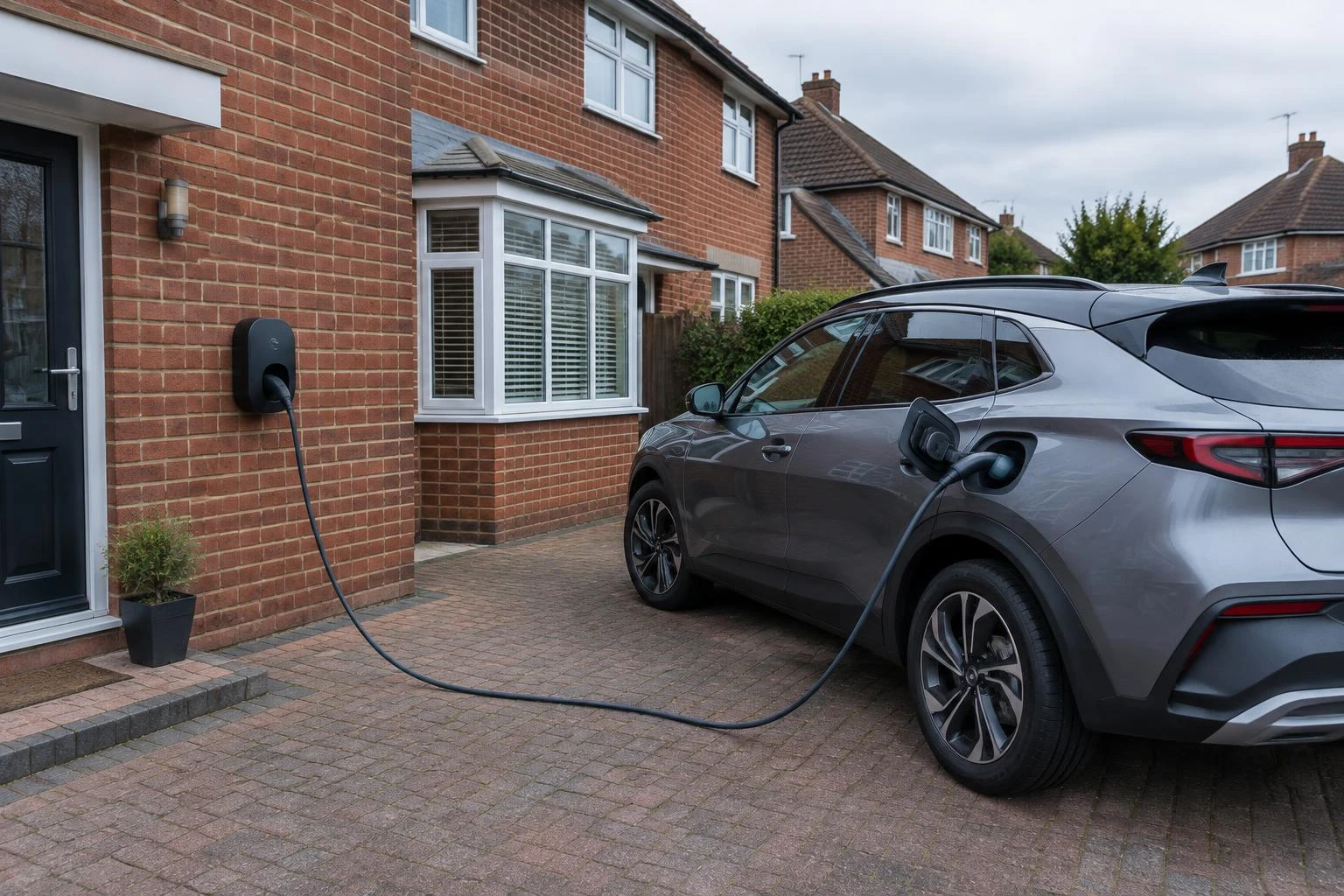
Cable distance and the route it follows
A longer run can require more material and work, but length alone does not tell the full story. A straightforward external route differs from a cable passing through finished rooms, around outbuildings or beneath paving. The cable needs to be appropriate to the installation and protected against relevant risks. Access can affect how work is carried out: a clear loft route presents different constraints from a tightly finished living space. When enquiring, describe where the consumer unit is and where the vehicle will park. An external photograph may help explain the layout where it can be taken safely. The survey is what establishes a suitable route, not a guessed distance from a message.
Consumer unit capacity and condition
A consumer unit (fuse box) must be considered for condition, compatibility and the protective arrangement required. A spare slot does not automatically mean a charging circuit can be added. An older fuse box may need work before new equipment can be connected, and existing circuits may need testing. If replacement or other remedial work is necessary, that becomes part of the project scope. The incoming supply and the rest of the building’s loads also affect what is possible. Rather than buying a charger and assuming the home can supply it, ask for the existing arrangement to be assessed first. The consumer unit replacement page explains why an upgrade involves more than changing the visible enclosure.
Earthing, protection and load management
The earthing arrangement and the required protective devices are important parts of an EV charging design. Equipment choices depend on the installation and the relevant requirements, including those of BS 7671 and the charger manufacturer. Other electrical loads can influence how much capacity is available for charging. Load management may be relevant where demand needs to be controlled, but the method and suitability depend on the system. There may also be supply-network questions to resolve. These details are not optional extras that can simply be omitted to make a quote look smaller. They establish whether the proposed installation is appropriate for the property and intended use.
Equipment features and connectivity
Chargers differ in their controls, lead arrangements, monitoring and connectivity. A tethered product may suit someone wanting a lead ready at the vehicle; an untethered point can suit a different routine. App features, user access and scheduling should be checked against the actual specification. Some features may involve additional service terms, accounts or connectivity requirements that are distinct from installation. Think about what you really need rather than choosing the most feature-heavy product by default. A reliable connection at the mounting position can matter for smart functions. Tell Sean about the vehicle, normal charging routine and any equipment you have already selected, while leaving room to check suitability before purchase.
Groundworks and making good
A driveway, path or landscaped garden can affect cable routing and reinstatement. It should be clear who is responsible for excavating, providing any required route and restoring the surface afterwards. A simple wall route is a different scope from work that crosses paving or requires coordination with another contractor. Finished surfaces inside a building can also need making good. Ask what is included in the proposed electrical work and what must be arranged separately. If the property is undergoing refurbishment, there may be opportunities to plan routes before surfaces are completed. A clear agreement prevents an initial description from being mistaken for a complete package covering every possible building task.
How to request a meaningful quote
Send your postcode, property type, parking position and a description of the existing fuse box without opening its cover. Mention an intended charger, shared parking rights or any planned electrical additions. If a business needs several points, explain the users and how vehicles are parked during the day. A survey can then clarify the route, supply and protection requirements. Ask for the scope to be explained, including any assumptions, exclusions and work that depends on further findings. Sean holds City & Guilds 2921-34 in Domestic & Commercial EV Charging. Follow the installation page for the survey and handover process, or request a callback if you prefer to explain your property in a conversation.
Compare scope before choosing an installer
Read what each proposal says about cable routing, electrical protection, assessment and documentation. Check whether groundworks, supply changes or equipment are assumed to be provided separately. If a detail is unclear, ask before treating the proposals as equivalent. An estimate based on a short description may need review after the survey. A meaningful comparison considers the installation you need, the assumptions made and the responsibilities for each task. That is more informative than a headline figure without a description of the property or work.
Do not confuse output with suitability
A higher advertised charging output is not automatically the right choice for the supply or vehicle. Capacity and use need assessing together.